
By Doreen Jacobi, DERDACK / SIGNL4
AI Intelligence Meets Real-World Urgency
Artificial Intelligence has become the sharpest tool in the digital arsenal – detecting anomalies, predicting failures, and uncovering risks before they unfold. Yet even the smartest system can’t roll up its sleeves and fix what’s broken.
AI can see the problem. But only people can solve it.
That’s the critical gap in today’s automation revolution: turning AI’s insight into human action.
And that’s where mobile alerting steps in – as the connective tissue between machine intelligence and human capability.
From AI Insight to Human Impact
AI doesn’t get tired, distracted, or overwhelmed – but it also doesn’t take responsibility.
It can forecast an outage, detect a breach, or flag a failing component, yet the moment that matters most is still human: who gets the alert, how fast they act, and whether they can prevent impact.
Intelligent alerting ensures that when AI raises its digital hand, a human immediately knows, understands, and responds.
It’s not about replacing humans with automation – it’s about elevating them with context, clarity, and speed.
In that sense, AI is the brain of modern operations, but humans are still the hands and heart. Only together do they form an intelligent, adaptive system.
Closing the Last-Mile Gap
Every AI-driven organization faces a “last-mile” problem: bridging the space between detection and response.
AI can filter noise and surface what matters – but unless someone acts, the insight dies on the dashboard.
That’s why real-time response platforms like SIGNL4 are redefining AI operations.
They transform raw machine intelligence into targeted, actionable signals – reaching on-call engineers, cybersecurity analysts, or emergency responders instantly, wherever they are.
Imagine an AI engine detecting a network intrusion at 2:00 a.m.
Instead of waiting for someone to check a monitoring console, SIGNL4 delivers a high-priority mobile alert to the on-duty security specialist – with full context, response options, and accountability.
That’s AI in motion – awareness becoming action.

Why 2025 Is the Tipping Point
The years 2023–2025 have seen the collision of two forces: AI maturity and operational urgency.
Predictive systems are getting smarter by the day – but trust, traceability, and accountability remain human territory.
Enter mobile alerting: the human-AI handshake.
It ensures that every AI decision is verified, acknowledged, and acted upon – creating a feedback loop that’s both intelligent and responsible. It’s not automation for automation’s sake; it’s automation that serves human judgment.
Think of it as the nervous system of AI operations – where signals travel instantly to the right reflexes, and intelligence becomes tangible performance.
Four Human–AI Synergies That Define the Real Opportunity
1. Awareness Becomes Action
AI can detect a threat, deviation, or failure long before a human ever could. But awareness alone doesn’t save uptime, prevent loss, or protect data – action does.
In large-scale IT environments AI-driven alerts often end at the dashboard. Integrated with mobile alerting, however, these insights instantly reach the right engineer on duty – with context, accountability, and response tracking.
That’s where intelligence becomes impact.
2. Prediction Becomes Prevention
Predictive analytics can tell you when something will fail, but not who will fix it. In industrial IoT and energy operations, machine learning models forecast equipment wear or overheating days in advance.
With smart alerting, maintenance teams are mobilized before failure occurs – turning data foresight into real-world prevention. It’s how factories, refineries, and smart buildings stay productive without interruption.
3. Automation Becomes Accountability
AI can execute scripts, isolate systems, or even restart services autonomously – but it can’t take responsibility. In regulated industries like finance or healthcare, every automated action must be traceable to human oversight.
Real-time alerting provides that audit trail – ensuring that each action is confirmed, acknowledged, and owned by a real person. It transforms automation from a black box into a transparent, governed process.
4. Data Becomes Duty
In cybersecurity and critical infrastructure, data flows faster than ever – from SOC tools to OT monitoring platforms in utilities and transportation. AI detects the risk in milliseconds – but it still takes human judgment to decide what happens next.
Automated alerting turns information into accountability: ensuring the right responder acts, confirms, and documents every step. Because in the end, data without duty is just noise.
The Human-AI Partnership
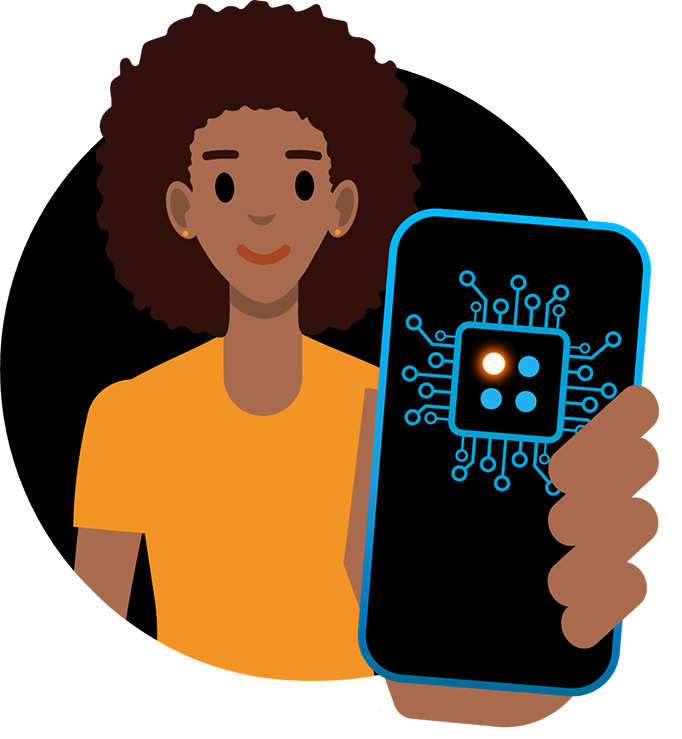
AI is brilliant at pattern recognition. Humans are brilliant at judgment, empathy, and accountability.
One without the other is incomplete.
Mobile alerting is where they meet – transforming intelligence into impact.
AI gives us foresight. Humans give it meaning.
Together, they don’t just react faster – they rethink resilience.
Conclusion: Intelligence Is Nothing Without Response
Artificial intelligence may detect risk faster than ever, but true operational excellence lies in how humans respond.
At DERDACK and SIGNL4, we believe resilience is built when AI’s precision meets human decisiveness – when insights don’t just inform, but instead ignite action.
Because no matter how intelligent the system, uptime, security, and reliability still depend on the people who respond.