Our Blog
The Derdack SIGNL4 blog is an essential hub for professionals aiming to boost their alert management and operational response. It delivers expert insights and tips on maximizing SIGNL4 for efficient alerting, team collaboration, and incident management. Ideal for IT, operations, and security teams, this blog offers practical guidance for enhancing response times and operational workflows.

Incident Response Is Broken Without Stakeholders in the Loop
Incidents ripple outward, affecting customers, executives, partners, compliance teams, and even public perception. That broader circle – the stakeholders – is often underserved by conventional tooling.
SIGNL4 Update: Stakeholder Communication and Signl Status Notifications
With our latest SIGNL4 release, we’re bridging the gap between your company and stakeholders for seamless incident communication.
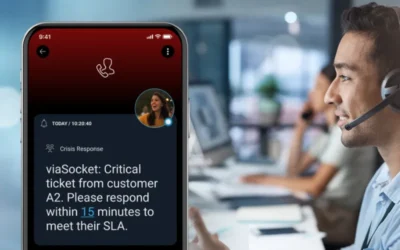
Eliminating Manual Steps in Alerting Processes
In many operational and incident-response scenarios, manual handling is simply the result of outdated workflows. In these cases, automation can significantly improve response times, efficiency, and reliability.

How MSPs Can Turn Detection into Accountable Response
Monitoring is no longer the differentiator. Every MSP detects incidents – but not every MSP manages response with the same precision.

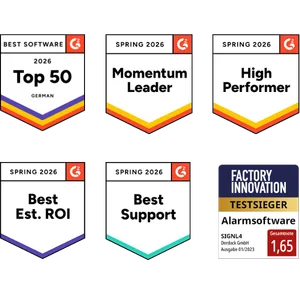
SIGNL4 Among Germany’s Best Software Companies
SIGNL4 has been recognized by G2 as one of the Best German Software Companies and we couldn’t be more excited.

Why SIGNL4 Is the Right Alarm Management Software to Maximize Machine Availability
A plant runs at its best when equipment stays online, processes remain stable, tolerances are met, raw materials are delivered in time, and scrap stays low. That’s how operations teams hit production targets, meet customer SLAs, stay on schedule, keep costs under control, and maintain consistent quality.
But does everything always run according to plan?
Of course not.

What You Need to Know About Alert Management Software
In this blog post, we’ll explain what alert management software does, where it’s used, and which features you should look for when choosing the right solution.

Incident Alerting: What We Believe It Should Do
Incident alerting is a critical part of modern operations, yet it’s often misunderstood or reduced to “sending notifications.” In reality, it is about ensuring that the right people are informed at the right time – and that incidents move from detection to action without confusion or delay.

SIGNL4 February Release – SCIM, Caller ID, Team Admin Invites
We’re excited to share SIGNL4’s first product update of 2026!
This release introduces automated user provisioning with SCIM, new controls for Team Admin invitations, and flexible caller ID options for call routing – all designed to simplify administration and improve daily workflows.

EasyVista Service Manager + SIGNL4
Modern IT service management platforms excel at structuring work: tickets, workflows, approvals, SLAs, and reporting. But when a major incident occurs, success depends on more than clean processes – it depends on how fast the right people are reached and respond.
This is where EasyVista Service Manager (EVSM) and SIGNL4 work exceptionally well together.

Enterprises don’t fail because systems go down
They fail because human response breaks down under pressure. Over the past decade, organizations have invested heavily in monitoring, observability, and automation. Dashboards are everywhere. Alerts fire instantly. Tickets are created automatically. And yet, when a...

What Our Customers Say: The Real Value of Incident Response Tools
We’ve put together a selection of use cases from a wide range of industries and applications. Enjoy exploring how different teams use our incident response tool in practice.

Closing the Year: What 2025 Taught Us About Resilience
It is that time of the year again. Time to reflect and look back at 2025. And I find myself thinking less about platforms and features – and more about the people behind them.

What Is IT Incident Response?
This article explores how IT incident response works today, why it matters, and how teams can build stronger processes, technologies, and communication structures to protect systems and data from outages, intrusions, and other threats.

SIGNL4 Release Update December – Smarter Workflows, Smoother Shifts
Our newest SIGNL4 release brings a set of practical improvements designed to make everyday operations easier and more reliable. These updates focus on helping teams plan better, react faster, and get more out of the Mobile App – without adding complexity.

From Noise to Notified: Making Azure Sentinel Alerts Actionable
Microsoft Sentinel has transformed how organizations detect and analyze threats across complex hybrid environments. With built-in automation, analytics, rule templates, and AI-driven correlation, it spots risks faster than ever before. But when an alert fires, one question still defines resilience: “Who acts on it – and how fast?”

How Can I Use Categories in SIGNL4 to Quickly Identify Alert Types?
When teams manage a high volume of alerts, it’s easy for things to start blending together. SIGNL4 Categories give you a simple but powerful way to visually and logically classify alerts – so teams can spot, sort, and act on them faster.

When AI Thinks and Humans Act: The Future of Operational Resilience
Artificial Intelligence has become the sharpest tool in the digital arsenal – detecting anomalies, predicting failures, and uncovering risks before they unfold. Yet even the smartest system can’t roll up its sleeves and fix what’s broken.
AI can see the problem. But only people can solve it.

How to Strengthen Your Security Operations with Incident Response Software
Companies are increasingly facing rising cyberthreats without proper incident response software – discover why they’re turning to SIGNL4 for fast, secure, and reliable alerting.

When IT Alerts Go Bump in the Night: A Halloween Tale of IT Alerting with SIGNL4
As the witching hour approaches, your data center hums quietly – servers glowing like jack-o’-lanterns in the dark. Everything seems calm… until suddenly, your phone lights up with a chilling alert. CPU usage is spiking. Network latency is haunting your system. The ghost of downtime lurks nearby. Welcome to the spooky world of IT alerting – where nightmares come true if your team isn’t ready.

How Do I Route Alerts by Location to the Right On-Call Team?
SIGNL4 routes alerts by location so the right team is notified – without waking the wrong people or alerting the wrong region.
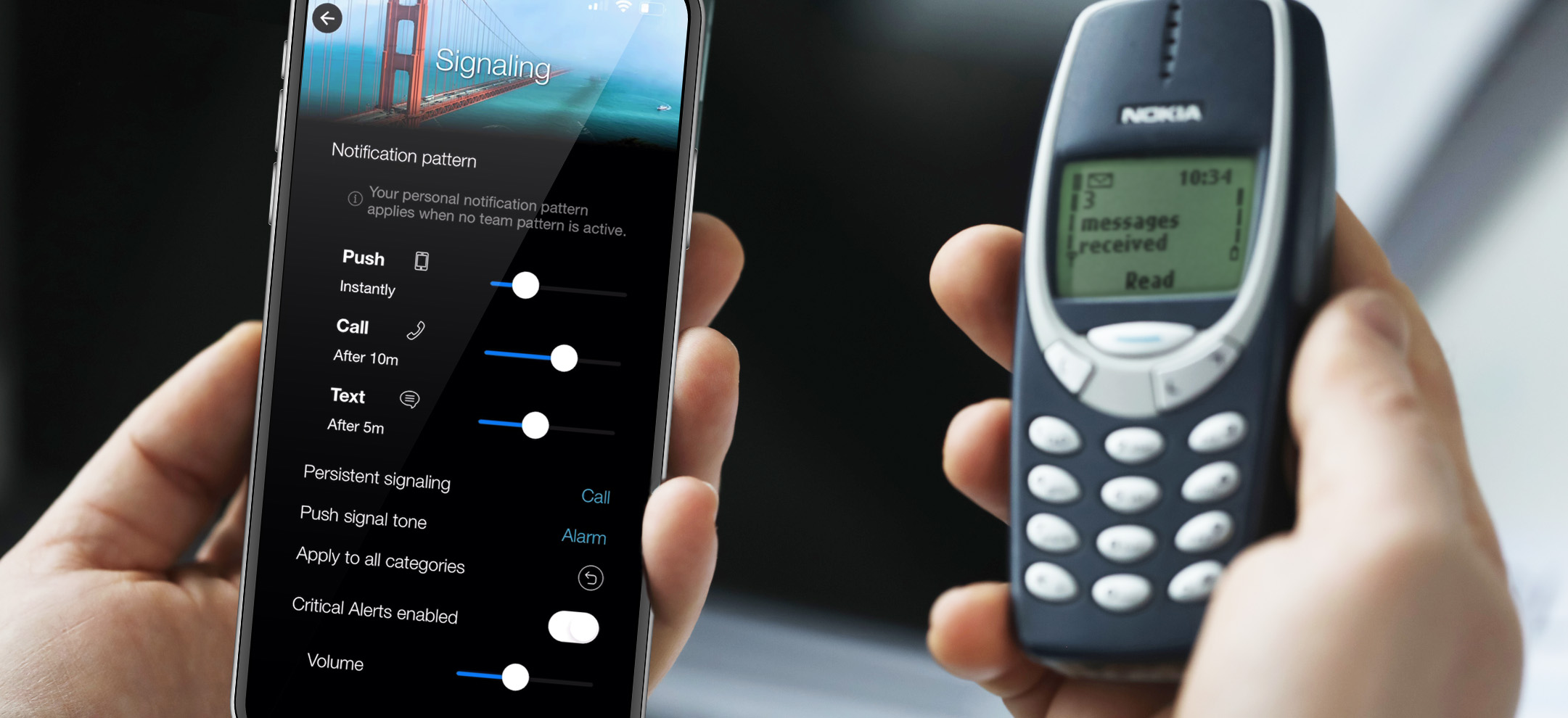
Goodbye Email-to-Text: Why Modern Mobile Alerting with SIGNL4 Is the Smarter Choice
Email-to-text is fading. Learn why it failed for critical workflows and how SIGNL4 ensures modern, reliable enterprise alerts.

Derdack Achieves ISO/IEC 27001:2022 Certification
Derdack attaches great importance to the confidentiality, availability and integrity of information. Therefore, Derdack has undergone a ISO27001:2022 audit and received a certification.

Alerts and Notifications – What’s the Difference?
In digital systems, communications, apps and IT/operations, the terms alerts and notifications are often used somewhat interchangeably – but there are important distinctions. Understanding these differences helps design better user experiences, reduce overload, and improve response to critical issues.

Enhancing Building Automation: Overcoming Challenges with SIGNL4
Building automation is essential for efficient facility management, but traditional systems often fall short. SIGNL4 enhances existing BAS by providing seamless integration, real-time alerting, proactive maintenance support, and focused notifications.

Quick Start Guide: Setting Up SIGNL4 in Minutes
Getting started with SIGNL4 is fast, easy, and doesn’t require any complex setup. This quick guide walks you through the essential steps – from signing up to sending your first alert and adding team members. In just a few minutes, you’ll have a fully functional, mobile-enabled alerting system ready to keep your team informed and responsive.

SIGNL4 Update: Duty Companion, Postmortem Report and Custom Branding
Discover SIGNL4’s latest update, featuring new capabilities like Duty Companion, which shows your shift details without unlocking your phone, and Postmortem Report, giving you full visibility into incident resolution and communication history.

How Do I Customize My Service Hotline with SIGNL4’s Call Routing?
Many organizations still rely on traditional phone hotlines to provide after-hours support or emergency coverage. While this approach is familiar, it’s often inefficient, hard to scale, and costly. Missed calls, voicemail black holes, or unclear routing logic can lead to delayed responses and frustrated customers.

Drinks, Bars, and Blazing Fast Alerting: A Conference Tale
It’s not every day your t-shirt starts a conversation that ends with a full product integration – at a rooftop bar, no less. But that’s exactly what happened. Discover how SIGNL4 was fully set up in just minutes – faster than finishing a drink.

How Do I Track Alert Ownership in SIGNL4?
SIGNL4 gives you clear, immediate visibility into who owns an alert – right down to the exact person who acknowledged it and when. Whether you’re in the mobile app or web portal, you can instantly see who took responsibility. No guessing.

From Detection to Action: Elevating Microsoft Sentinel with SIGNL4 Mobile Alerting
In modern security operations, detection is only half the battle. The other half? Making sure the right human sees the alert – and acts on it – in time.

Enhanced Messaging with RCS in SIGNL4
SIGNL4 will automatically use RCS for delivering messages if the recipient’s device supports it and if RCS is available in the recipient’s region. No setup is required by the recipient – RCS is already integrated into most default messaging apps on Android and is now becoming available on iPhones with iOS 18.

What Is Critical Alerting and How Does SIGNL4 Help?
Even a few minutes of downtime can have serious consequences. That’s where critical alerting comes in – making sure the right people are notified of urgent issues, right when it matters most. But what exactly is critical alerting, and how can the right software help you do it better?

How to Convert Email to Push Notifications
Email alerts alone often aren’t enough when you’re responsible for critical systems or infrastructure. Messages can easily be buried in inbox clutter – or worse, completely missed during off-hours. If you’re managing IT operations, DevOps, or facility monitoring, timely awareness of issues is crucial – but email just doesn’t cut it.

Notification Software: Why Real-Time, Reliable Notifications Matter
It’s woven into our everyday lives – quietly buzzing, blinking, or nudging us with information. But when it comes to critical operations in IT, healthcare, logistics, or utilities, not all notifications are created equal. And that’s when we go from notification software to alert notification software.

April 2025 Update – Fully Redesigned Signl-Center, Shift Tiers with Escalations, AI Shift and Duty Scheduling, and a new Chat View for the Mobile App
With our latest April update, we are setting a new benchmark in incident management excellence. The Signl-Center in our web portal has undergone a major redesign, delivering a superior, more intuitive layout, enhanced tracking of notifications and escalation...

AT&T Email-to-Text Service ended: Why SIGNL4 is the Best Alternative
In a move that caught many businesses and IT teams off guard, U.S. mobile carrier AT&T officially discontinued its email-to-text gateway service. AT&T email-to-text was shut down on June 17, 2025. This change means that sending sms messages and mobile text...

Infrastructure Monitoring: A Comprehensive Guide to Integrating Effective Alerting
Imagine you’re the IT guardian of a busy company. Every day, you rely on infrastructure monitoring tools to keep an eye on your servers, networks, and applications. These tools are your early warning system – they spot glitches before they become full-blown problems. But what happens when an alert is missed or delayed? That’s where effective alerting comes in.

Atlassian retiring Opsgenie – Why SIGNL4 is the perfect Opsgenie Alternative
Atlassian’s decision to retire Opsgenie by 2026 has left many businesses searching for a reliable alternative for incident management and critical alerting. SIGNL4 is a great Opsgenie alternative, offering a modern and mobile-first approach to alerting, escalation,...
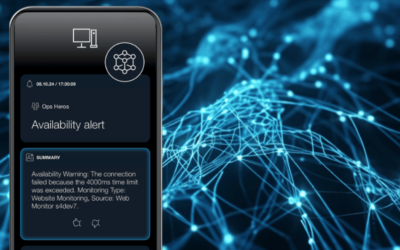
Weaving AI into SIGNL4
By Matthes Derdack, CEO
By late 2023, our team at SIGNL4 concluded that AI had matured enough to provide real value in specific areas, particularly due to its strong capabilities in pattern detection and matching.
In this article, Matthes showcases the AI features we have already implemented and what our future roadmap looks like.

RedIron: Unifying Alerts and Notifications in IT
RedIron, a managed services provider and retail integrator, faced challenges with fragmented alert systems using email and SMS.
RedIron needed a modern, reliable solution for unified alerts and notifications that could optimize their incident management process and support team located in the US, Canada, and offshore.

The AI Revolution in Incident Management: Insights from the Frontlines – by Doreen Jacobi
Cofounder Doreen Jacobi spoke with several of our customers about the revolution AI is bringing to incident management. Artificial Intelligence has seamlessly integrated into our daily lives, often in ways we barely notice. But what does that actually mean for...

Derdack Podcast: How SIGNL4 Unifies RedIron’s Monitoring and Notifications
A story of integration, innovation, and efficiency in monitoring and notifications for modern IT operations About In this episode, Todd from RedIron shares insights on how Derdack’s alerting solution SIGNL4 has unified and transformed their IT operations. RedIron, a...

What is Push Alerting?
Push alerting is a method of delivering real-time, actionable notifications directly to a user’s device – most often a smartphone, tablet, or computer – without requiring the user to actively check for new information. These messages are known as push notifications, and they “push” from a server or alerting system to a client application, bypassing slower or less reliable channels like email.

What is Alerting?
Alerting is a central component of modern safety and operating concepts. It is used to act quickly and effectively in hazardous situations. Whether it’s supporting operations teams or informing the general public, different scenarios serve distinct requirements and...

On-Call Scheduling Software – which is the best in 2025?
Managing on-call schedules is a critical challenge for many industries, including healthcare, IT, customer support, and emergency services. As technology evolves, on-call scheduling software has become an essential tool for streamlining workflows, reducing burnout,...

Best Practice in IT Alerting
How to achieve best practices in IT Alerting? In order to use IT alerting effectively, the following points should be taken into account: Success factors in IT Alerting Clear prioritization Not every alert is equally important. Filtering is crucial and prioritization...
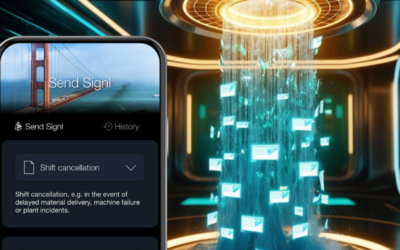
Update December 2024 – Intelligent event filters and enhanced manual alarm distribution
In our December update, we have significantly revamped and improved manual alerting. If you need to carefully evaluate incidents before distributing them manually to the respective teams or want to send critical operational updates to relevant personnel, you’ll love...

What is the best IT alerting software for 2026?
Having a reliable IT alerting software is crucial to ensure swift issue resolution and minimal downtime. The right IT alerting software not only notifies you of critical incidents but also ensures that your team is equipped with tools to respond promptly and...

How to Save $160,000 Per Year – With Automated Alerting
The journey from identifying a problem to solving it is often prone to delays and human error, resulting in immense costs. Learn how one of our customers saved $160,000 by switching to automated alerting.