



Opsgenie is retiring soon. Move to SIGNL4 today and stay alerted. Learn how.
Turn Alerts Into Action
Ensure the right person responds instantly – anywhere














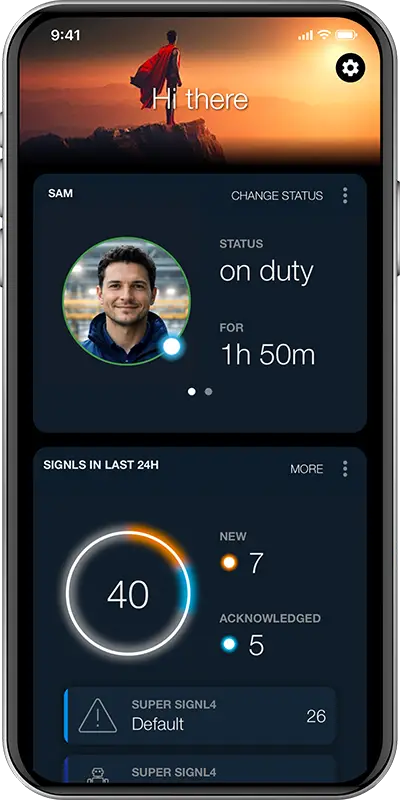
Alerting and Response for Modern Operations
 |  |
Problem detection doesn’t ensure action.
- sPeople are away from their desk
- sSimple notifications get missed, ignored, or delayed
- sCritical alerts don’t reach the right people
- sAlert fatigue increases
- sOwnership is unclear
- sClear Responsibility is missing
Built for the heroes who keep everything running
SIGNL4 ensures every critical alert and incident triggers immediate action – anywhere. The right people on duty are notified instantly and reliably, alert notification delivery is tracked, acknowledgements are processed, escalations happen automatically, and response is guaranteed. Every action is tracked – delivering full transparency and accountability.
Faster Incident Response
%
Less Unexpected Downtime
%
Less False Alerts
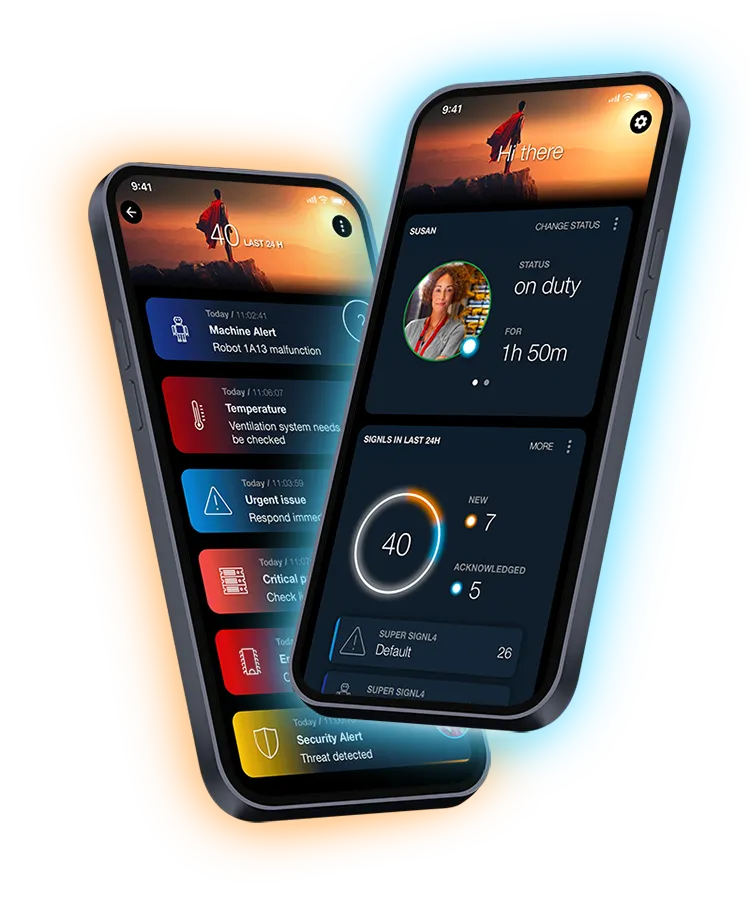
Reliable. Mobile. Automated.
Reliable
Alerting
- RPush, Text, Voice, Email, Chat
- RFilters Events, Cuts Noise
- RDelivery & Ack Tracking
- RFully Automated Escalations
Mobile
Incident Response
- RMobile-First Response App
- RReal-time Incident Chat
- RActive Stakeholder Communication
- RPostmortem Reports
Automated
On-Call Management
- ROn-Call Scheduling
- RReal-time "Who is on call"
- RRoutes alerts to on-call personnel
- RAfter-Hours Voice Call Routing
Smarter Alerting and Response with AI
SIGNL4 applies AI where it makes operational response faster and more effective – without compromising reliability. Automatically route alerts to the right people, summarize complex incidents, optimize on-call schedules, and uncover patterns across your operations.
Smart Alert Distribution · Route alerts to the right people
AI Alert Summaries · Understand incidents faster
Intelligent Scheduling · Simplify on-call planning
AI Insights · Detect patterns, trends and anomalies
Stay in control of AI. Enable AI capabilities individually, with transparent information about model hosting and data processing. Customer data is not used for model training.





Use Cases
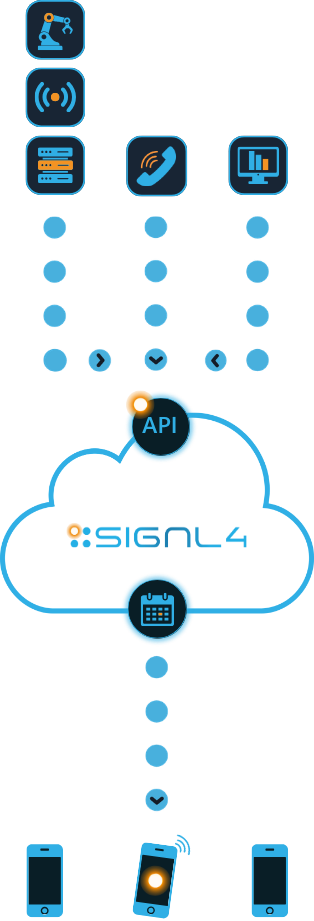
SIGNL4 is the mobile-first operational alerting and response platform for mission-critical infrastructure and environments – ranging from IT and security operations to industrial OT systems.
200+ Integrations
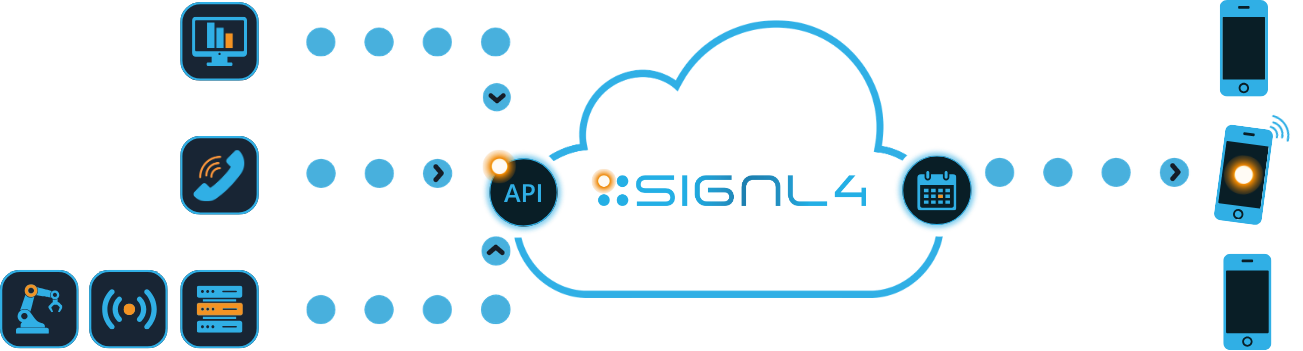
With 200+ tested and trusted integrations, SIGNL4 is the alerting and response platform for your entire stack. It connects to any system in your mission-critical infrastructure stack – using email, webhooks, REST APIs, and powerful two-way connectors.



Next Steps
Start your free 30-day trial of mobile-first operational alerting and response
What’s new: Insights and Use Cases

SIGNL4 Update: AI-Powered Event Routing, Alert Analytics, On-Call Coverage & More
Our update introduces AI-powered event routing, new analytics to uncover alert hotspots, and instant visibility into on-call coverage gaps.

Critical Event Management Platforms: What They Are and What They Do
Learn what Critical Event Management platforms are and how they help organizations respond effectively to critical events.

SIGNL4 Update: User Tags, Missed Call Follow-Up, Granular AI Settings & More
This release brings new features and improvements across Call Routing, User Profiles and Management, Stakeholder Communication, and AI.
Why SIGNL4?
Modern monitoring and control systems can detect incidents quickly across infrastructure, cloud environments, security platforms, and IoT systems – but alerts alone do not guarantee that someone responds. Simple notifications sent via email, SMS, or chat are often missed, delayed, or ignored, especially outside working hours.
SIGNL4 acts as the reliable, mobile-first response layer for modern operations, closing the gap between alert detection and incident response and resolution.
It ensures every critical alert and incident is reliably communicated, owned, acknowledged, escalated and resolved.
The platform provides key capabilities such as event triage, automated alerting workflows, mobile alerting via push, text and voice, instant escalation, on-call scheduling, and real-time acknowledgment tracking. Alerts are tracked and escalated automatically until a responder takes ownership, ensuring that incidents are never left unattended.
SIGNL4 integrates with monitoring tools, cloud services, security platforms, and industrial systems, enabling seamless alerting and response workflows across environments.
By turning alerts into coordinated anywhere action, SIGNL4 helps organizations with mission-critical infrastructure to reduce downtime, accelerate incident resolution, and maintain reliable mission-critical systems.